
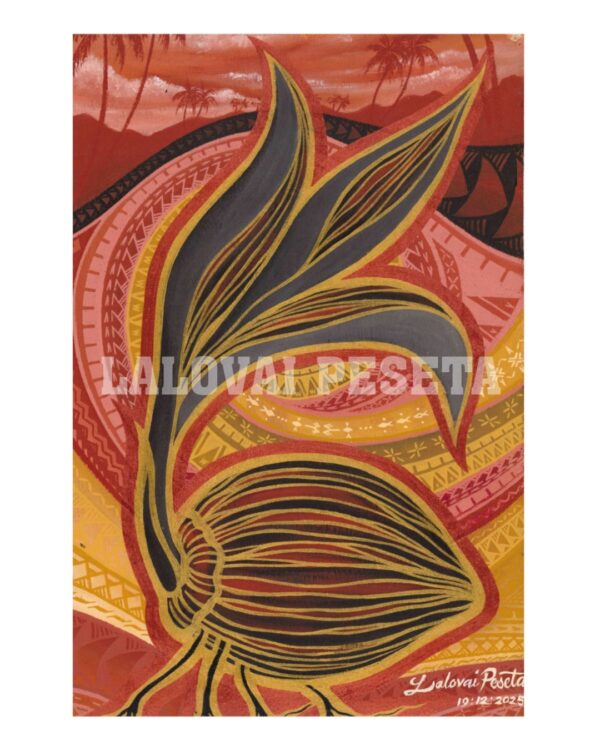


Popouli
T75.00
Price Summary
- T75.00
- T75.00
- T75.00
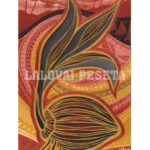
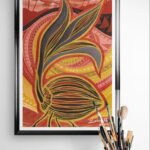
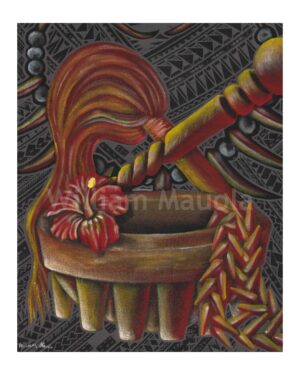
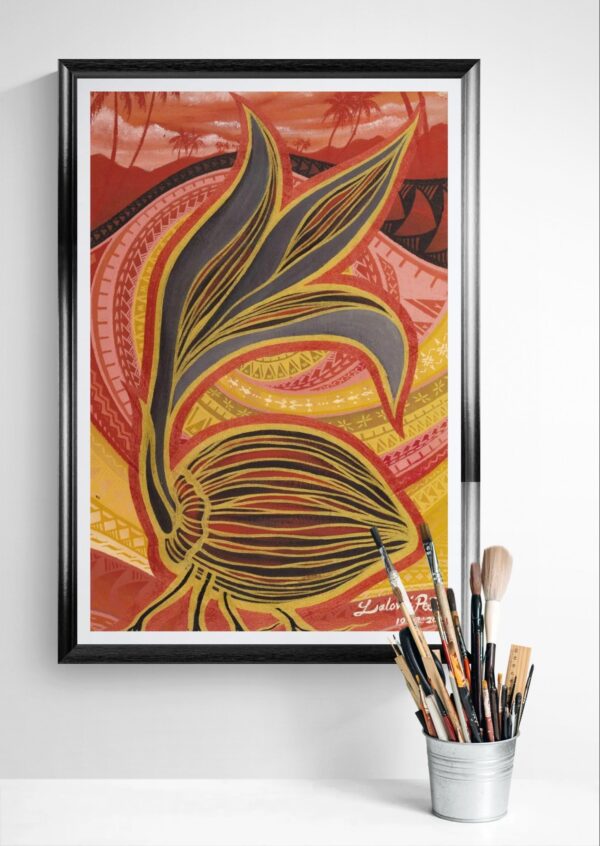
Popouli is a painting that uses the life stages of a coconut to represent the optimal timing for regrowth and regeneration.
Vendor Information
- Store Name: Lalovai Peseta
- Vendor: Lalovai Peseta
- No ratings found yet!
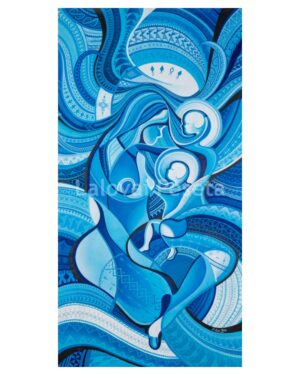
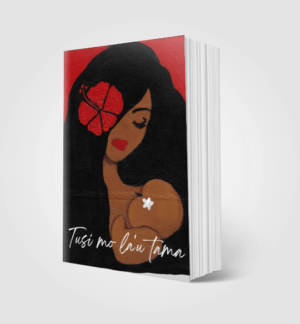
Pacific Blue Madonna
The original painting was exhibited and sold at the Regenerating Oceania Exhibition at the 13th Festival of Pacific Arts and Culture in Honolulu 6-16 June 2024.
This print is a deep statement about motherhood and the crucial role mothers have in sustaining society in Oceania.
Pretty Crabby
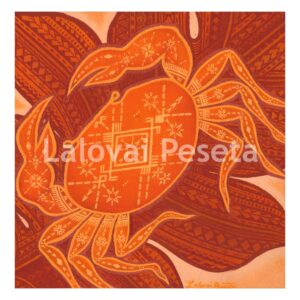
This print by Lalovai Peseta features his signature style of tatau patterns and the monochromatic palette he does so well.
Related Products
Natural Woman
Craving nature, feeling anti-technology, craving authenticity, resenting clocks and calendars and dresscodes, imagining living off the land, channeling ancestors, craving trees and fruit, and fresh air.
Cinquain
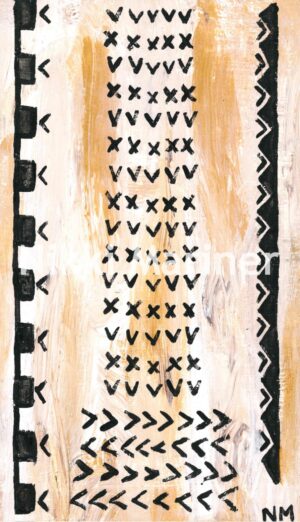
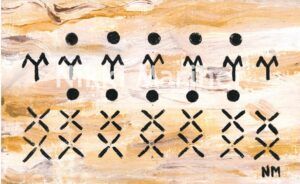
Playing with poem structure, paint, and Samoan markings.
Small paintings inspired by the 7 metre by 2 metre works (pic 6) I created for the VIP Terminal Lounge at Faleolo International Airport.
The cinquain poem was invented by an American poet, and she drew inspiration from Japanese forms such as haiku and tanka, which are arranged in five lines. The cinquain has a syllable count of 2- 4 – 6 – 8 – 2.
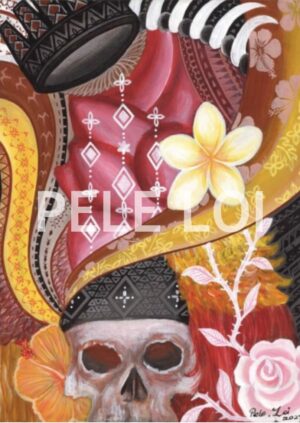
To’onai by Pele Loi
This print by Pele Loi depicts a traditional Sunday lunch including much loved Samoan food laid out on a plate of leaves against a background of tatau patterns.
Villanelle
Playing with poetry structure and paint using Samoan markings.
These small paintings about poetry are inspired by the huge paintings (pic 6) I created for the VIP Lounge at Faleolo International Airport.
The villanelle originated in Italian and Spanish folk songs and in the late nineteenth century, the French began to form the villanelle into a more fixed poetry structure of nineteenth lines: 5 lots of 3, and concluding with a set of 4 lines.
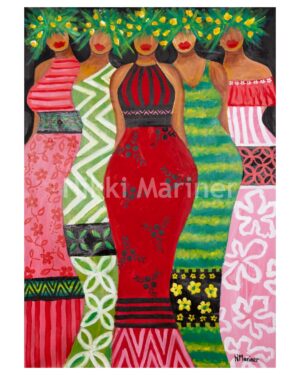
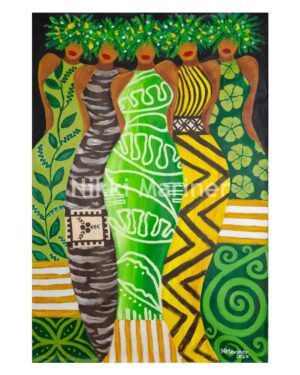
Sisters of the Sun
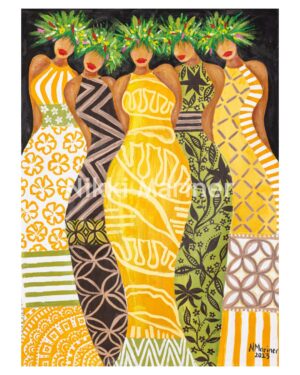
This print is from a series of three large paintings by Nikki Mariner, titled, ‘No Woman is an Island’.
Cry Me A Moana
My sisters and I live different lives than we used to.
I watch their online stories traveling Europe and dancing at music festivals.
We discuss pending court cases and struggles of self-employment.
The days of desperately seeking babysitters, carpooling for school events, and borrowing from each other to pay the rent are gone.
We are less compliant and more calm.
We are more heartbroken and less cooperative.
We are smarter and deeper.
That’s what this painting is about.
Letting go. Floating.
I’ve always loved Ella Fitzgerald singing Cry Me A River.
The lyrics say it all. Cry me a river, I cried a river over you.
But the version that goes with this painting is Cry Me A River by Julie London, Live at the Americana Hotel, New York 1964. It’s breathtakingly beautiful.
So this painting is titled Cry Me A Moana and captures a similar sentiment as the song.
(Moana is a word that means ocean in several Pacific Island languages.)
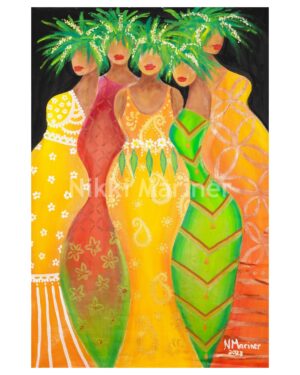
Five brown-skinned full-bodied women floating in water.
They are reaching and twisting.
Their respectable white dresses become translucent, and the flower leis of honour are drifting away, and the women don’t care.
They float above fish skeletons and remnants of the past.
I hope it resonates. I want to make art that people feel, not only look at.
Daughters of the Waters
This print is from a series of three large paintings by Nikki Mariner, titled, ‘No Woman is an Island’.
Women of the Woods
This print is from a series of three large paintings by Nikki Mariner, titled, ‘No Woman is an Island’.
Pacific Blue Madonna
The original painting was exhibited and sold at the Regenerating Oceania Exhibition at the 13th Festival of Pacific Arts and Culture in Honolulu 6-16 June 2024.
This print is a deep statement about motherhood and the crucial role mothers have in sustaining society in Oceania.
Mamanu by Pele Loi
This print features traditional Samoan patterns and symbols found in our siapo (tapa cloth) and tatau (tattoos).
Lady Fingers | Misiluki
- I was staring at banana trees when I started painting this and deciding on a colour palette.
Yellows, greens and browns. Not colours I usually use but you can’t argue with nature’s beauty.
Then the title just seemed so obvious and perfect.
Misiluki is Samoan for Lady Finger bananas.
Lady Fingers. Five digits on a hand and five is the number of sisters I paint over and over again.
This bunch of five sisters are all grown up.
My Time
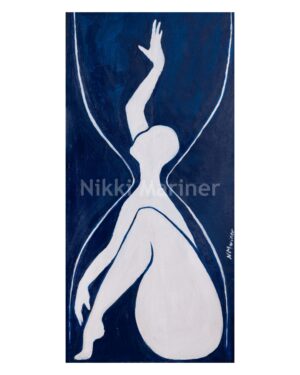
The image that comes to mind is a figure inside an hourglass with most of her body in the lower half and just a head and arm reaching through to the top half.
I decided on the most simplistic abstract form following the style of Matisse.
It seemed to make the image more universal.
Everyone knows the feeling of time running out but not giving up.


There are no reviews yet.