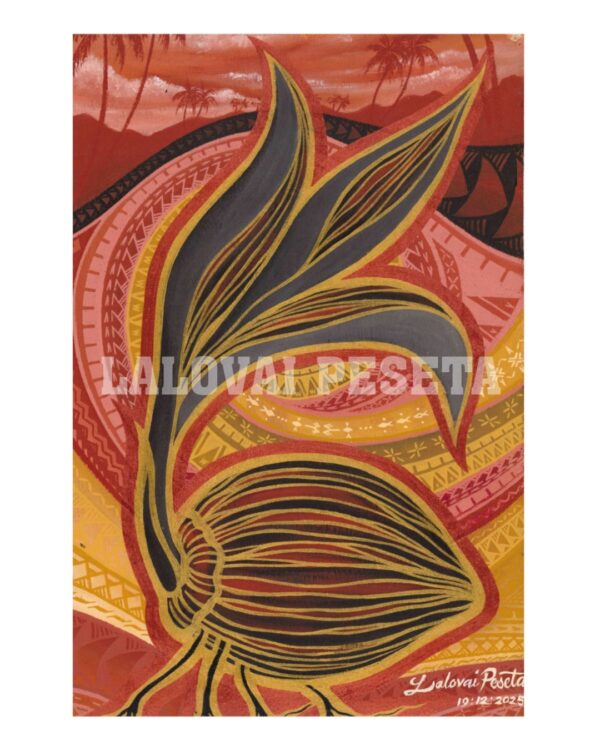
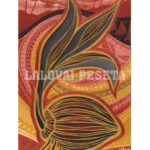
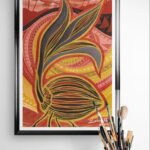
Popouli
T75.00
Price Summary
- T75.00
- T75.00
- T75.00
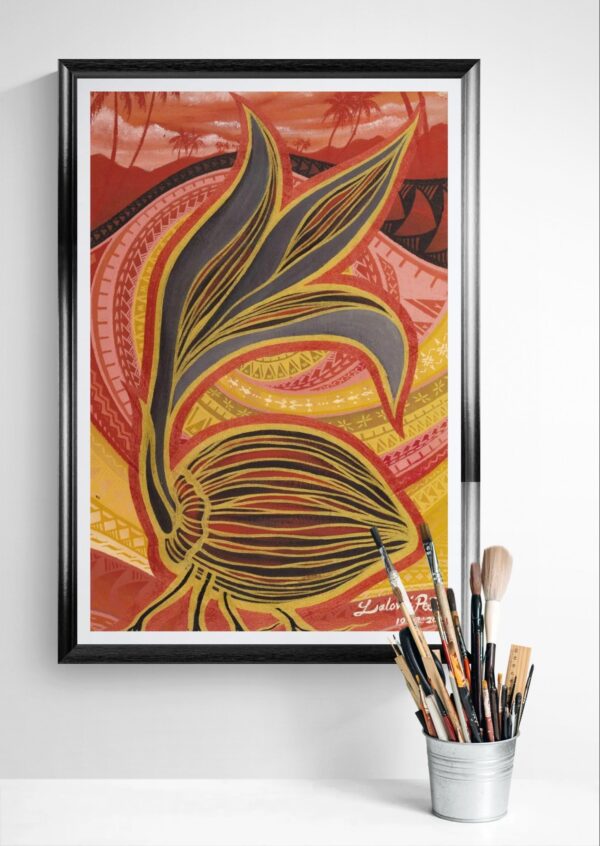
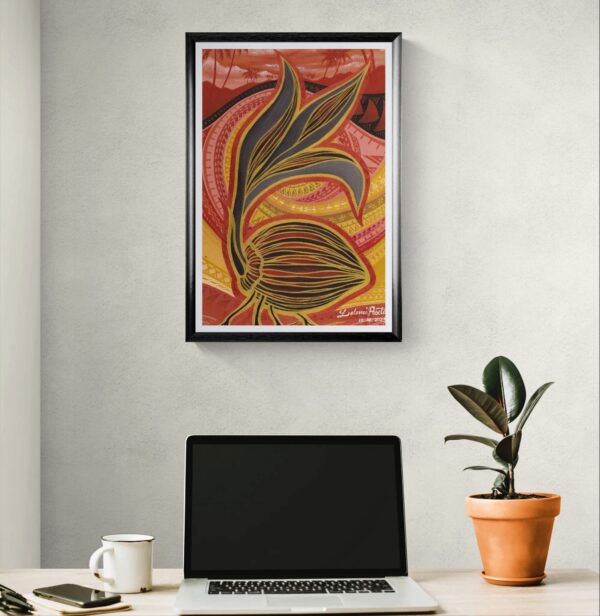
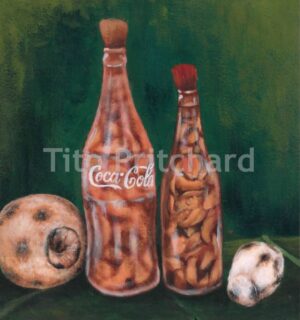
Popouli is a painting that uses the life stages of a coconut to represent the optimal timing for regrowth and regeneration.
Vendor Information
- Store Name: Lalovai Peseta
- Vendor: Lalovai Peseta
- No ratings found yet!
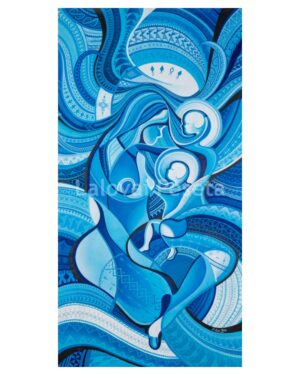
Pacific Blue Madonna
The original painting was exhibited and sold at the Regenerating Oceania Exhibition at the 13th Festival of Pacific Arts and Culture in Honolulu 6-16 June 2024.
This print is a deep statement about motherhood and the crucial role mothers have in sustaining society in Oceania.
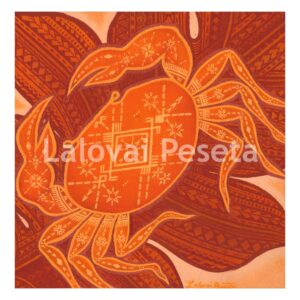
Pretty Crabby
This print by Lalovai Peseta features his signature style of tatau patterns and the monochromatic palette he does so well.
Related Products
Villanelle
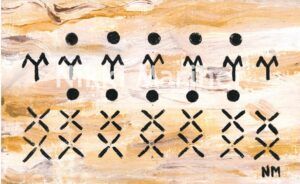
Playing with poetry structure and paint using Samoan markings.
These small paintings about poetry are inspired by the huge paintings (pic 6) I created for the VIP Lounge at Faleolo International Airport.
The villanelle originated in Italian and Spanish folk songs and in the late nineteenth century, the French began to form the villanelle into a more fixed poetry structure of nineteenth lines: 5 lots of 3, and concluding with a set of 4 lines.
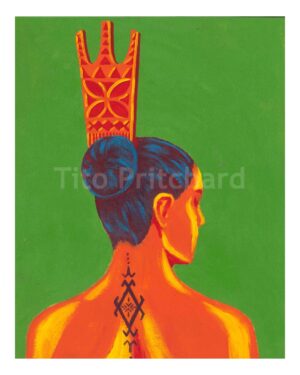
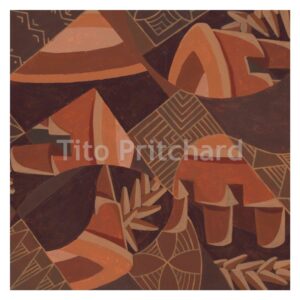
Selu by Tito Pritchard
This print by young artist and carver Tito Pritchard features a traditional Samoan hair comb which is carved from wood.
Pacific Blue Madonna
The original painting was exhibited and sold at the Regenerating Oceania Exhibition at the 13th Festival of Pacific Arts and Culture in Honolulu 6-16 June 2024.
This print is a deep statement about motherhood and the crucial role mothers have in sustaining society in Oceania.
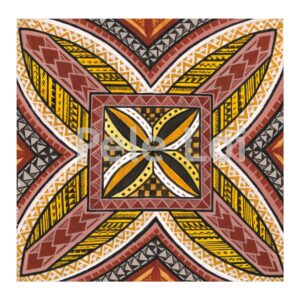
To’onai by Pele Loi
This print by Pele Loi depicts a traditional Sunday lunch including much loved Samoan food laid out on a plate of leaves against a background of tatau patterns.
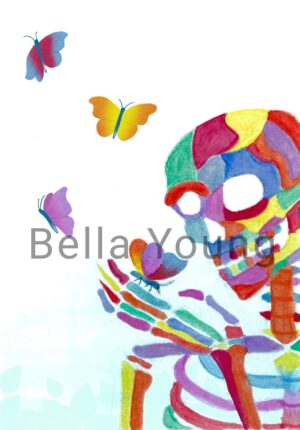
Fragility
- From her art series, “Butterfly and Bone”. A mixed media artwork inspired by artist Bradley Theodore. Bella seeks to explore life and death using both digital artistry and traditional watercolor.
Only $10 USD (approx currency conversion)
Lady Fingers | Misiluki
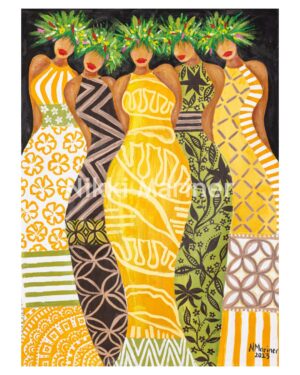
- I was staring at banana trees when I started painting this and deciding on a colour palette.
Yellows, greens and browns. Not colours I usually use but you can’t argue with nature’s beauty.
Then the title just seemed so obvious and perfect.
Misiluki is Samoan for Lady Finger bananas.
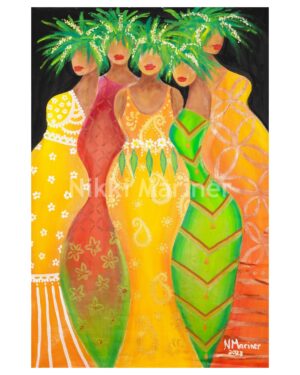
Lady Fingers. Five digits on a hand and five is the number of sisters I paint over and over again.
This bunch of five sisters are all grown up.
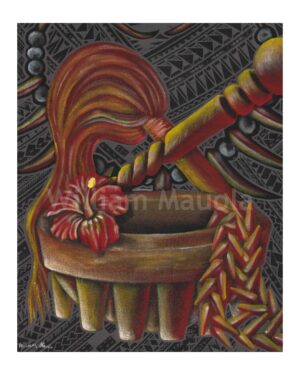
Fa’asamoa by William Mauola
This print by William Mauola includes ceremonial items of Samoan culture displayed in a tanoa against the background of tatau patterns.
It includes a nifo oti, ulafala, to’oto’o, fue and an aute/a red hibiscus.
Me Time
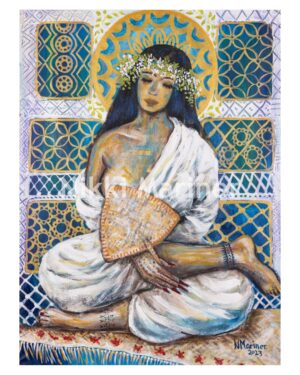
This painting is about trying to capture the individual experience of looking inside for clarity and truth and looking outside for strength or inspiration.
I painted it as I was learning to meditate.
An unlikely sources of artistic inspiration in this depiction of a Samoan woman is mosque architecture.
Suga Skull by Pele Loi
Pele paints a contemporary visualisation of icons of Samoan culture. The tanoa becomes a crown, a tuiga made of tatau symbols, flowing ribbons of elei, and flowers adorn a skull.
The Editor
Internal chaos or forced deconstruction of identity? You decide.
Only $10 USD (approx currency conversion)
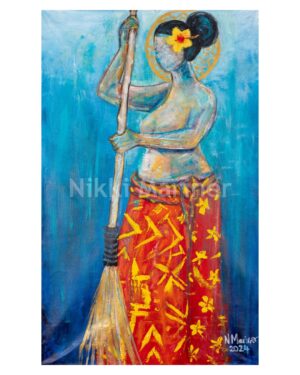
The Cleaner
The first painting of every year is significant.
It sets the tone, mood, style, and benchmark for the year.
The Cleaner was my first for 2024.
It’s a figurative painting of a woman with a broom.
She wears only a lavalava and a sei.
Inspirations.
1. I fell in love with a sculpture by Italian artist Ernesto Coter while eating in his kitchen at Santa Maria Rezzonico a few weeks earlier. The sculpture was sitting on the sideboard beside his dining table. He said it is a Samoan woman dancing. This painting is a response to the sculpture (Pic 5)
2. A new year inspires a fresh look at life, reassessment, and decluttering. It’s not the first time my first painting for a new year has included a broom. It’s about spring cleaning your life as a new year begins.
3. Spending time with my family gave me a fresh respect for two of my sisters who each successfully run their own cleaning businesses in Queensland. It’s more interesting and complex work than I expected, and what they do for their clients is admirable.
I wanted to honour cleaners so I painted gold behind her head to show she is iconic.
And she had a gold broom.
4. Samoans sweep everything regularly – the beach, the grass the house, and everything.
5. A woman with a broom is a timeless and common sight in the background of every culture and every age. I want to uplift and highlight this symbol.
As a goddess. With an iconic halo.
We have often been this person and often see this person. And they’re important and essential.
They get rid of crap and they make the world more beautiful.
Goddesses.
6. I painted a blue ocean type background because I was seeing a lot from the 2023 United Nations Climate Change Conference in Dubai, while painting. Many people I know were there representing island nations of the Pacific Ocean.

Women of the Woods
This print is from a series of three large paintings by Nikki Mariner, titled, ‘No Woman is an Island’.


There are no reviews yet.