
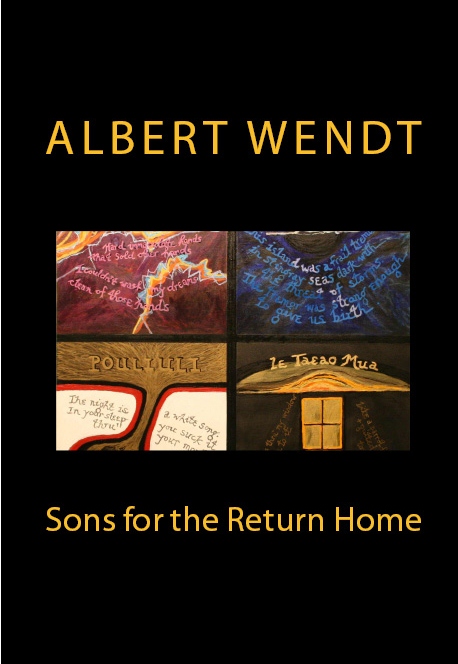


Sons for the Return Home
T30.00
Price Summary
- T30.00
- T30.00
- T30.00
Originally published in 1973, this story of star-crossed lovers spotlights the complex nature of love, freedom and racism in New Zealand. The first novel ever published by a Samoan author and a classic of Pacific Literature, readers worldwide continue to respond to the clarity of vision in this powerful story of cross-cultural encounter by Albert Wendt.
Only $10 USD (Approx currency conversion.)
Vendor Information
- Store Name: Wendt
- Vendor: Wendt
- No ratings found yet!
Leaves of the Banyan Tree
A saga of three generations, Leaves of the Banyan Tree tells the story of a family and community in Western Samoa undermined by the changes brought about by colonialism. It is considered a classic work of Pacific literature and is arguably Wendt’s greatest novel.
Only $10 USD. (Approx currency conversion.)
Related Products
Fa’asamoa by William Mauola
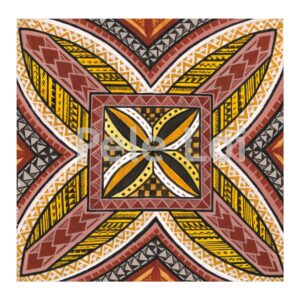
This print by William Mauola includes ceremonial items of Samoan culture displayed in a tanoa against the background of tatau patterns.
It includes a nifo oti, ulafala, to’oto’o, fue and an aute/a red hibiscus.
Cinquain
Playing with poem structure, paint, and Samoan markings.
Small paintings inspired by the 7 metre by 2 metre works (pic 6) I created for the VIP Terminal Lounge at Faleolo International Airport.
The cinquain poem was invented by an American poet, and she drew inspiration from Japanese forms such as haiku and tanka, which are arranged in five lines. The cinquain has a syllable count of 2- 4 – 6 – 8 – 2.
Memory of Flight
Musing on the paradox of permanence. What lasts? Bone? Or a butterfly’s brief beauty?
“Butterfly and Bone”
Only $10 USD (approx currency conversion).
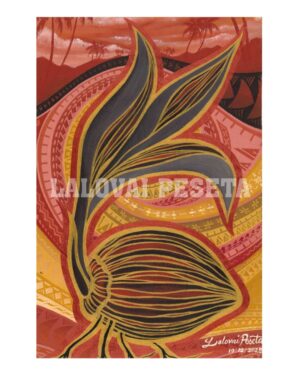
Popouli
Popouli is a painting that uses the life stages of a coconut to represent the optimal timing for regrowth and regeneration.
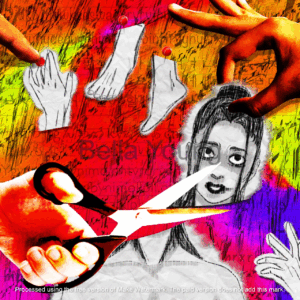
Visiting the Seamstress | Alu I le Su’isu’i
Going to your seamstress for a new dress or puletasi, choosing your material, being measured all over your body, hearing feedback about your measurements, discussing the design, discussing the event… it’s a whole thing.
#ifykyk
That’s what this painting is about.
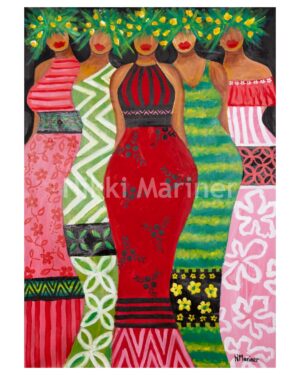
Mango Fandango
INSPIRATION
Mangoes are always special.
Fancy. Soft. Sweet. Round.
Celebratory and luxurious.
So this is what I infused in the figures, tones, and shapes.
It feels warm and sweet and happy.
I learned so much about mangoes doing this painting.
Eg.
🥭The paisley pattern on bandanas originates from mangoes.
🥭The leaves from a mango tree are believed to repel negative energy and attract prosperity and fertility in India where the mango is believed to originate.
ARTWORK
The starting point was the heads of the women, which followed an exact formation of mangoes hanging on a tree. Everything went from this point.
I used the colours of mangoes: orange, yellow, red, green, coral, purple. Tropical, sweet and glowy.
I used the curvy shapes of oval mangoes, long pointy leaves, and delicate long red stems laden with pale yellow tiny mango flowers.
Metallic colours of gold and copper added luxe and celebration.
This is the story of Mango Fandango.
(I used fandango in the sense of fun, party and dance).
Umu Feast by To’a Sāleilua
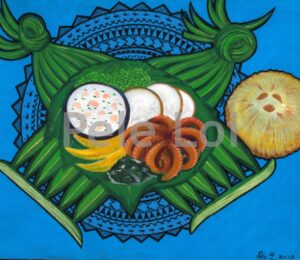
This print by To’a Sāleilua shows a steaming Samoan feast of pork, fish, breadfruit, taro and more, which are cooked using traditional methods.
Daughters of the Waters
This print is from a series of three large paintings by Nikki Mariner, titled, ‘No Woman is an Island’.
Pacific Blue Madonna
The original painting was exhibited and sold at the Regenerating Oceania Exhibition at the 13th Festival of Pacific Arts and Culture in Honolulu 6-16 June 2024.
This print is a deep statement about motherhood and the crucial role mothers have in sustaining society in Oceania.
Sisters of the Sun
This print is from a series of three large paintings by Nikki Mariner, titled, ‘No Woman is an Island’.
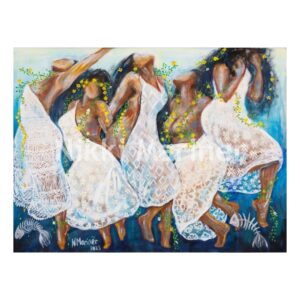
Cry Me A Moana
My sisters and I live different lives than we used to.
I watch their online stories traveling Europe and dancing at music festivals.
We discuss pending court cases and struggles of self-employment.
The days of desperately seeking babysitters, carpooling for school events, and borrowing from each other to pay the rent are gone.
We are less compliant and more calm.
We are more heartbroken and less cooperative.
We are smarter and deeper.
That’s what this painting is about.
Letting go. Floating.
I’ve always loved Ella Fitzgerald singing Cry Me A River.
The lyrics say it all. Cry me a river, I cried a river over you.
But the version that goes with this painting is Cry Me A River by Julie London, Live at the Americana Hotel, New York 1964. It’s breathtakingly beautiful.
So this painting is titled Cry Me A Moana and captures a similar sentiment as the song.
(Moana is a word that means ocean in several Pacific Island languages.)
Five brown-skinned full-bodied women floating in water.
They are reaching and twisting.
Their respectable white dresses become translucent, and the flower leis of honour are drifting away, and the women don’t care.
They float above fish skeletons and remnants of the past.
I hope it resonates. I want to make art that people feel, not only look at.


There are no reviews yet.